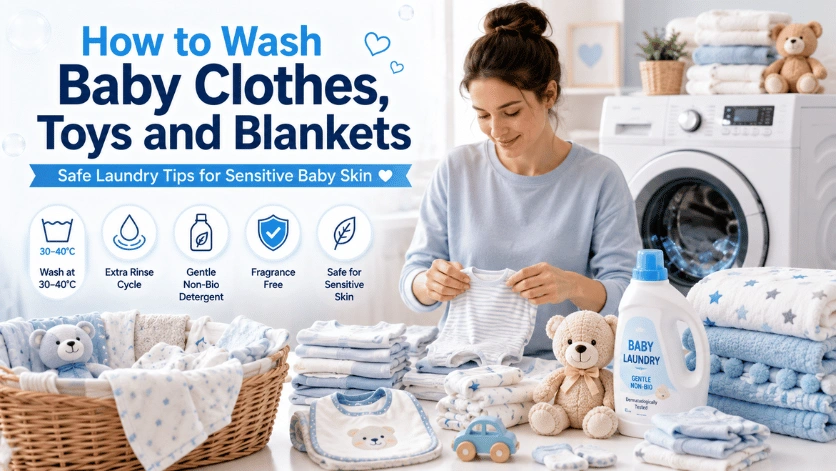
Babies have skin that reacts to things adults don't even notice. It's thinner. Absorbs stuff faster. Gets irritated by chemicals, rough textures and leftover soap residue. That makes washing baby clothes a different job from normal laundry. Wrong detergent? Rash. Too much soap left in the fabric? Rash. Fabric softener? Probably a rash. I've pulled together everything you need to know about how to wash baby clothes safely. Covers detergent choices, temperatures, stain removal and even how to clean those stuffed animals your little one chews on.
New Baby Clothes Aren't as Clean as They Look
That fresh pack of baby grows from the shop? Not actually clean. Factory chemicals sit in the fabric. Dust from warehouses and shipping containers clings to the threads. Other people have handled them before they reached the shelf.
Every single piece of baby clothing needs washing before your baby wears it for the first time. That goes for gifted items and second hand stuff too. One gentle wash with non-bio detergent at 30 to 40°C sorts it out. After that first wash? Babies create a ridiculous amount of laundry. Milk, food, nappy leaks, drool. It happens all day, every day. Regular adult detergents carry fragrances, dyes and brightening chemicals that irritate baby skin. So you need a different approach. Let's go through it step by step.
Picking a Detergent That Won't Irritate Baby Skin
This is the single most important choice when you wash baby clothes. Not all "baby safe" products live up to the label. Here's what actually matters:
Non-bio detergent. No enzymes. Enzymes are the number one irritant for sensitive baby skin
Fragrance free and dye free. Artificial scents top the allergen list for babies
Liquid over powder. Dissolves better at low temperatures. Leaves less residue on fabric
Skip fabric softener for at least the first six months. It coats fibres with chemicals that press against your baby's skin all day
Stick to the dose on the label. More soap doesn't mean cleaner. It means more residue left behind
Want softer clothes naturally? Half a cup of white vinegar in the rinse cycle does the trick without chemicals
Find a detergent that works and don't switch. Chopping and changing products makes irritation more likely. If a rash appears after wearing freshly washed clothes, the detergent is always the first suspect. A baby laundry service uses tested gentle products if you'd rather not experiment at home.
Temperature and Cycle Settings for Every Baby Item
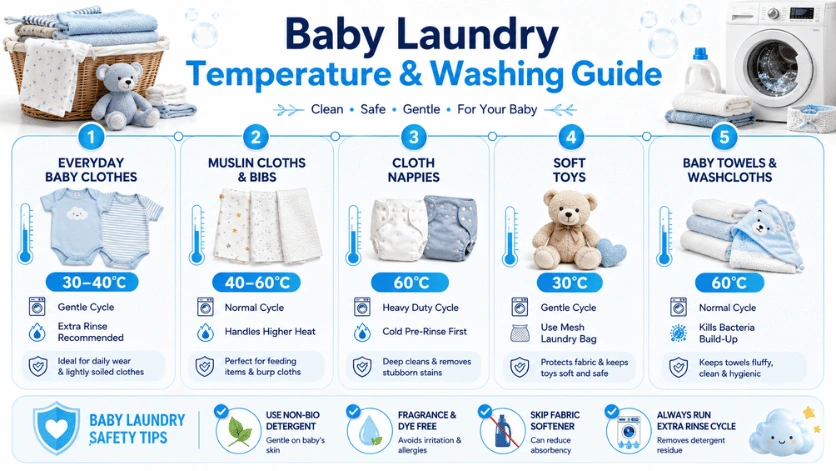
Different baby things need different wash settings. This table takes the guesswork out of it.
Item | Temperature | Cycle | Extra Notes |
|---|---|---|---|
Everyday baby clothes | 30 to 40°C | Gentle | Turn inside out. Fasten poppers |
Cloth nappies | 60°C | Heavy duty | Cold pre-rinse first |
Muslin cloths and bibs | 40 to 60°C | Normal | Can handle the extra heat |
Blankets and swaddles | 30 to 40°C | Gentle | Check the label for specifics |
Soft toys | 30°C | Gentle | Pop in a mesh laundry bag |
Baby towels and washcloths | 60°C | Normal | High heat kills bacteria buildup |
Here's the general idea. 30 to 40°C for most baby clothing. 60°C for anything that needs a proper germ kill. Nappies, towels and items used when your baby was ill. Always run an extra rinse cycle. That flushes the last traces of detergent out of the fabric and away from your baby's skin.
Dealing with Baby Stains (They Never Stop Coming)
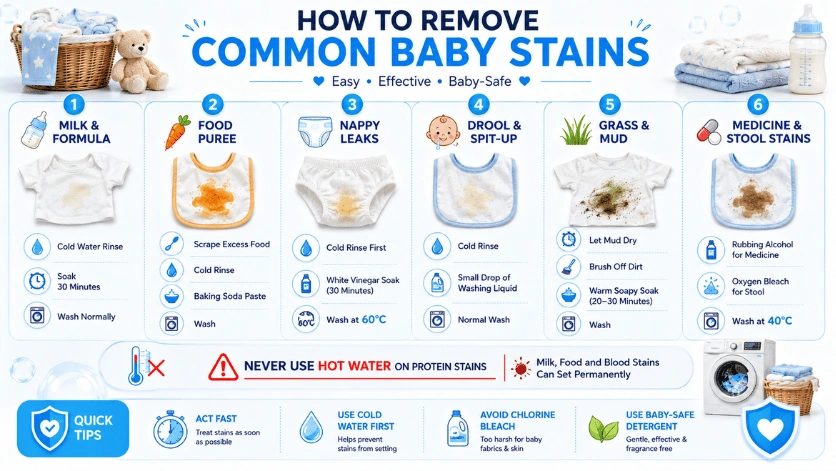
Baby stains are a daily event. Multiple times daily, actually. Good news? Most come out easily if you jump on them quick. Here's what works for the stuff you'll see most when you wash baby clothes:
Milk and formula? Cold water rinse straight away. Soak 30 minutes in warm water with a bit of non-bio detergent. Then wash
Food puree, fruit, veg? Scrape off the lumps. Cold rinse. Baking soda and water paste on the stain. Leave 15 minutes. Wash
Nappy leak? Cold rinse first. Always cold. Soak in a bucket with cold water and a tablespoon of white vinegar for an hour. Wash at 60°C
Drool and spit-up? Rinse cold. Tiny drop of washing up liquid rubbed into the mark. Normal wash
Grass and mud from crawling? Let the mud dry first. Brush off what you can. Soak in warm soapy water. Wash. Our stain removal guide covers trickier marks
Medicine spills? Dab with rubbing alcohol. Wash right after
Yellow newborn stool? Soak in cold water with oxygen bleach. Not chlorine bleach. Few hours soak, then wash at 40°C
One critical thing. Never use hot water on protein stains like milk, blood or food. Hot water cooks the protein into the fabric. The stain becomes permanent.
What About Soft Toys and Baby Blankets?
Your baby chews on that stuffed bear. Drools on it. Sleeps with it face pressed into the fur. Dust mites, bacteria and allergens build up in there fast. Regular washing matters, but you've got to be gentle about it.
Thing | How to Clean | How Often |
|---|---|---|
Machine-safe soft toys | 30°C gentle cycle in a mesh bag | Every 2 to 4 weeks |
Battery toys | Wipe the surface with a damp cloth | Weekly |
Knitted or crocheted toys | Hand wash in lukewarm water | Monthly |
Cotton baby blankets | 40°C gentle cycle | Weekly |
Wool baby blankets | Hand wash cold | When needed |
Sheepskin items | Specialist dry cleaning | When needed |
Before washing any soft toy, check for loose bits. Button eyes, ribbons, things that could come off in the drum. Take batteries out if you can. Stick the toy in a pillowcase or mesh bag for protection. After washing, squeeze out water gently. Air dry completely before handing it back. Damp toys grow mould inside. Nobody wants that near their baby.
Should Baby Clothes Go in Separately from Everything Else?
For the first few months? Yes. Keep them separate. Adult clothes carry stronger detergent residue, fabric softener chemicals and dyes that can transfer onto baby items during the wash. That transfer is invisible but your baby's skin notices it.
Once your baby passes three or four months and shows no signs of skin sensitivity, you can start mixing loads. Just keep using the same gentle non-bio detergent for the whole thing. And if anyone in your house works with paints, chemicals or industrial stuff, always wash their work gear separately from baby items. No exceptions. Same goes for heavily soiled items or anything that needs bleach.
Let a Professional Handle the Baby Laundry Pile
New parents are exhausted. And babies produce a genuinely shocking amount of dirty laundry. If the pile is winning, it's completely fine to hand it off. Our baby laundry service at Nearest Laundry uses dedicated gentle cycles and non-bio detergents for every baby item. We sort by fabric. Wash at the right temp. Rinse thoroughly.
Free pickup and delivery across London within 24 hours. Covers everything from baby T-shirts and baby joggers to baby coats and baby vests.
Wrapping Up
Learning how to wash baby clothes the right way protects your baby's skin and makes the whole laundry process less stressful. Use gentle non-bio detergent. No fragrance. Wash at 30 to 40°C for most things and 60°C for sanitising. Treat stains with cold water first. Skip softener. Run extra rinse cycles. That covers 90 percent of it.
If you'd rather someone else handle it, Nearest Laundry's baby clothes service does it all. Free pickup, gentle professional washing and delivery across London within 24 hours. Check our pricing to get started.