
White clothes have a shelf life. Not because the fabric wears out, but because that crisp bright look fades wash after wash. Your white tees turn grey. Shirt collars go yellow. Socks look dingy no matter how hard you scrub. Frustrating, isn't it? Here's the thing, though. Most of that dulling comes from washing mistakes. Not from the clothes actually wearing out. A few simple changes to how you handle your whites can keep them looking fresh for way longer than you'd expect. This guide shows you how to keep clothes bright and white using methods that professional laundry services rely on every day.
Why Do White Clothes Lose Their Brightness?
Before you can fix the problem, it helps to understand what's actually causing it. White fabrics dull for a handful of specific reasons. And most of them are fixable.
Every wash cycle leaves a thin layer of detergent residue on the fibres. Body oils and sweat add another layer. If you live in a hard water area like London, mineral deposits stack on top of all that. Over weeks and months, those layers build up. The fabric starts looking grey or yellowish.
Then there's dye transfer. Washing whites with colours, even light colours, lets microscopic dye particles settle into white fabric. You won't see it after one wash. But after twenty? Your whites look muddy. Overloading the machine makes everything worse. Clothes can't move freely, so detergent doesn't rinse out properly. All those layers keep building up.
Habits That Keep Whites Looking New
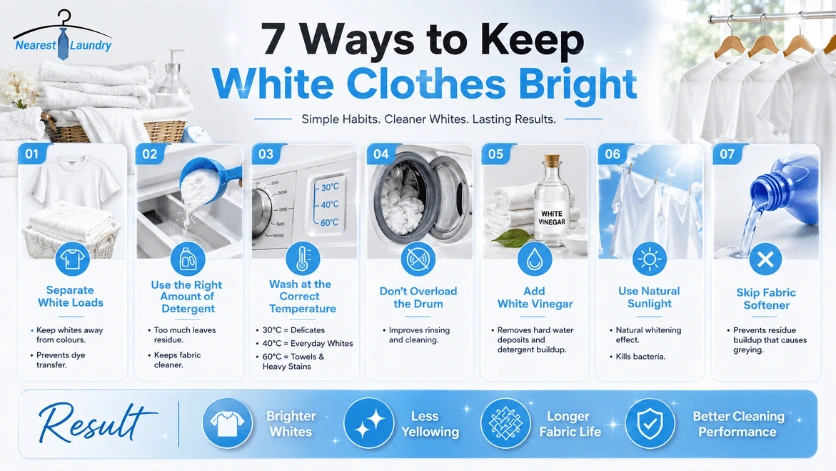
You don't need special products. Just better habits. Build these into your routine, and you'll see the difference within a few washes if you want to keep clothes bright and white:
Whites go in their own load. Every time. Even light pastels can bleed enough to dull them
Use the right amount of detergent. More isn't better. Extra soap leaves residue that greys fabric
Wash at the warmest temp the care label allows. Heat dissolves body oils and soap more completely
Don't stuff the machine full. Clothes need room to tumble and rinse properly
Treat stains the moment they happen. A fresh spill comes out ten times easier than a dried one
Run an extra rinse cycle for white loads. Flushes out leftover detergent
Zero cost. Almost zero extra effort. These habits stop the gradual buildup that makes whites go dull. If your whites are already looking tired, read on. The next sections cover how to bring them back.
Kitchen Cupboard Fixes That Actually Work
Some of the best ways to keep clothes bright and white use things sitting in your kitchen right now. No fancy products needed.
What to Use | How | What It Does |
|---|---|---|
White vinegar | 1 cup in the rinse cycle | Strips detergent residue and mineral deposits |
Baking soda | Half cup in the wash with detergent | Boosts cleaning power. Brightens fabric |
Lemon juice | Soak in hot water with juice of 2 lemons for an hour | Lifts yellowing from cotton |
Table salt | Soak new whites in salted cold water before first wash | Locks in brightness from day one |
Hydrogen peroxide 3% | 1 cup in the wash | Whitens without the harshness of chlorine bleach |
Sunlight | Hang damp whites outside in direct sun | Natural bleaching. Free. Also kills bacteria |
White vinegar is probably the most useful one on that list. Dissolves mineral deposits from hard water. Strips detergent buildup. Gets rid of musty smells. A cup in every white wash makes a noticeable difference fast. Pair it with baking soda for an even stronger result. Our full guide on removing stains from clothes covers specific stain types in detail.
The Water Temperature Question
People argue about this one. Cold wash or hot wash for whites? Here's the honest answer:
Cold, below 30°C. Gentlest on fabric. Prevents shrinkage. Fine for lightly worn whites with no stains
Warm, 40°C. The sweet spot for most white loads. Dissolves oils and detergent well without being rough on fabric
Hot, 60°C. Best whitening and sanitising results. But cotton shrinks and elastic weakens over time at this heat
Heavy staining or yellowed whites? Warm to hot water plus a whitening agent gives the best outcome
Always read the care label first. Some whites have stretch fibres that melt in hot water
Hard water area? Slightly higher temps help overcome the mineral interference
London water is hard. If your whites keep going grey despite doing everything right, hard water is probably the culprit. White vinegar in every wash or a water softening tablet in the drum sorts that out.
Getting Yellow Stains Out of White Clothes
Yellow patches on white clothes. Usually underarm areas and collars. Comes from sweat, deodorant and body oils building up over time. Stubborn stuff. But not permanent if you catch it.
Stain | Fix | Steps |
|---|---|---|
Sweat or underarm yellowing | Baking soda paste | Mix with water. Smear on stain. Wait 30 mins. Wash |
Deodorant buildup | White vinegar | Soak the area in neat vinegar for 30 mins. Wash |
Collar grime | Dish soap or shampoo | Rub into the stain. Leave 15 mins. Wash at 40°C |
Old set-in yellow marks | Oxygen bleach soak | Dissolve in hot water. Soak garment 4 to 6 hours. Wash |
General dullness | Lemon and sun | Soak in lemon water. Hang in direct sunlight while damp |
Here's a mistake people make. Reaching for chlorine bleach as the first fix for yellow stains. Bad idea. Chlorine bleach reacts with the proteins in sweat residue and can actually make yellowing worse. Try oxygen bleach or the natural methods first. For seriously old, set-in stains, you might need to repeat the treatment two or three times. Our guide on removing yellow armpit stains has the full breakdown.
Does Fabric Softener Actually Ruin White Clothes?
Yes, it contributes to the problem over time. Here's why. Fabric softener coats fibres with a thin chemical layer. That layer is what makes them feel soft. But on white clothes, that coating gradually traps dirt, detergent residue and body oils against the fabric. Each wash adds another layer of coating. Your whites slowly go grey and you can't figure out why.
Ditch the softener on white loads. White vinegar in the rinse cycle gives a similar softening effect without coating the fibres. If you really love the feel of softener, use it on whites only once in a while. Not every wash. The difference shows up within a month.
Professional Whitening at Nearest Laundry
We see a lot of whites that home washing can't recover. Dress shirts that have gone grey from hard water. White bed sheets with years of yellowing. Favourite tees that look dull no matter what the owner tries. Our professional grade detergents and precise temperature cycles are built to handle exactly that.
At Nearest Laundry, we sort every white item by fabric before it goes near a machine. Each piece gets the right treatment for its material. Free pickup and delivery across London within 24 hours. Whether it's shirts, towels, bed sheets or silk pieces, we bring them back properly white.
Calculation
Knowing how to keep clothes bright and white is mostly about consistency. Separate your whites. Use the right amount of soap. Wash at the right temperature. Add vinegar to the rinse. Skip the fabric softener. Treat yellow stains before they set. Small changes, big difference over time.
If home washing isn't getting the results you want, Nearest Laundry's professional whitening service brings whites back. Free pickup and delivery across London within 24 hours. Check our wash and iron pricing and get started.