Your vacuum picks up crumbs and loose dust. That's about it. The real dirt? It's packed deep down in the carpet fibres where no home vacuum reaches. Ground-in grime, allergens, old spills, pet mess and bacteria. All sitting in there, getting worse week by week. That's what professional carpet cleaning methods deal with. But there are several different methods out there and each one does a different job. Some are deep and thorough. Others are fast and surface-level. This guide breaks down the main professional carpet cleaning methods so you know exactly what works, what doesn't and which approach suits your situation.
Why Your Vacuum Can't Do What the Pros Do
Think of your carpet like a thick sponge. A vacuum skims the top layer. Loose hair, dust and bits of food come up. But everything that's been walked in, pressed down and soaked into the backing stays put.
Over months, that buildup compresses. Dead skin, pollen, pet dander, food particles and shoe dirt all get mashed into the lower fibres. Every step pushes it deeper. Your carpet starts looking dull and worn in the high traffic areas. Hallways, living room paths, in front of the sofa. Professional carpet cleaning methods reach those layers. They pull out what's embedded, not just what's sitting on top. For homes with kids, pets or anyone with allergies, a professional clean every 6 to 12 months makes a genuine difference to how the house feels and smells.
The Five Main Professional Carpet Cleaning Methods
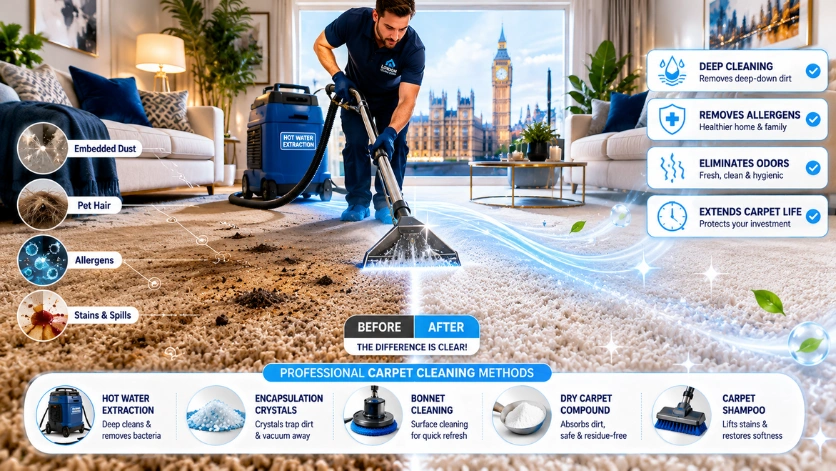
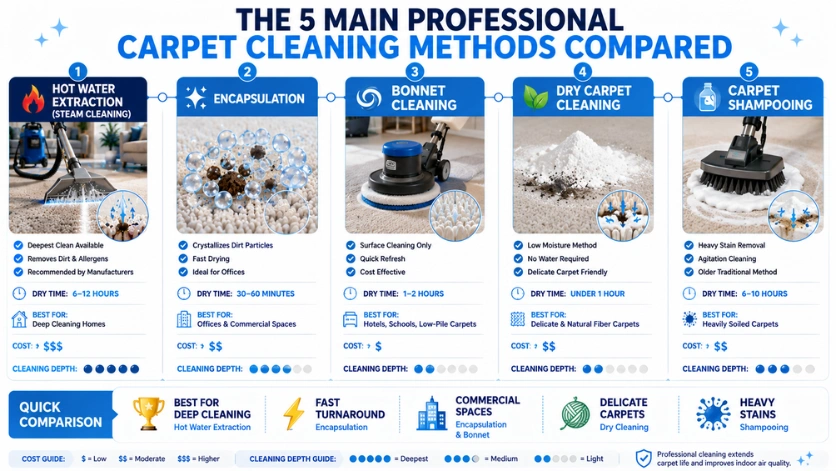
Pro cleaners use several approaches. Here's the honest breakdown of each one. What they do. How they work. What they're actually good at:
Hot water extraction, usually called steam cleaning. Pressurised hot water mixed with cleaning solution gets forced deep into the carpet. Then a powerful vacuum sucks it all back out along with the dissolved dirt. Deepest clean available
Encapsulation. A chemical solution goes on the carpet and crystallises around dirt particles as it dries. Once dry, you vacuum up the crystals and the dirt trapped inside them. Newer method, very popular in offices
Bonnet cleaning. A spinning pad soaked in cleaning solution scrubs the carpet surface and absorbs dirt. Quick and cheap. Only cleans the top layer though
Dry carpet cleaning. A powder compound gets spread across the carpet and worked into the fibres by a machine. The powder traps dirt. You vacuum it all up after. No water involved
Shampooing. Foamy shampoo goes on the carpet. A brush machine agitates it. The dirty foam gets extracted. Older method. Still works on heavy staining
Each has a place. The right choice depends on how dirty your carpet is, what it's made of and how fast you need the room back.
Side by Side: How Professional Carpet Cleaning Methods Compare
This table puts the key differences in one place so you can compare fast.
Method | How Deep? | Dry Time | Works Best For | Cost |
|---|---|---|---|---|
Hot water extraction | Deep. Reaches carpet backing | 6 to 12 hours | Heavy dirt, old stains, allergy homes | Medium to high |
Encapsulation | Medium. Upper and mid fibres | 30 to 60 minutes | Offices, hotels, routine maintenance | Medium |
Bonnet cleaning | Surface only | 1 to 2 hours | Quick refresh between deep cleans | Low to medium |
Dry cleaning | Medium | Under 1 hour | Delicate carpets, fast turnaround jobs | Medium |
Shampooing | Medium to deep | 6 to 10 hours | Really heavily stained carpets | Low to medium |
Most carpet makers say hot water extraction is the gold standard. If you only clean your carpet once or twice a year, that's the one to pick. For commercial spaces with heavy foot traffic that need quick cleaning with no downtime? Encapsulation or bonnet makes more practical sense.
Hot Water Extraction: The Deep Clean Workhorse
Hot water extraction is the most widely used of all professional carpet cleaning methods in the UK. Despite the nickname "steam cleaning," it doesn't use actual steam. Here's what happens. A machine heats water. Mixes it with a cleaning solution. Injects it into the carpet under high pressure. That water loosens and dissolves everything down in the fibres. Dirt, bacteria, allergens, old stains. Then a powerful vacuum sucks all that dirty water back out.
Gets right down to the carpet backing. Deepest clean you can get
Kills bacteria and dust mites. Proper allergy relief
Works on wool, synthetic and blend carpets. Most versatile option
Most carpet manufacturers recommend it for warranty purposes
Downside? Drying takes 6 to 12 hours depending on airflow in the room
Over-wetting by a bad operator can cause mould growth underneath. Pick someone experienced
Professional machines pull out far more water than rental ones. Means faster drying
If your carpet hasn't had a professional clean in over a year, or there are deep stains and stubborn odours, hot water extraction is the go-to. Full stop. Our guide on carpet washing methods explains the differences in more detail.
Encapsulation and Dry Methods: Fast and Low-Mess
Encapsulation has picked up steam over the last few years. Especially in commercial settings. The process is simple enough. A polymer based solution goes onto the carpet. As it dries, it forms tiny crystals around each dirt particle. Regular vacuuming then pulls up those crystals with the dirt trapped inside.
Feature | Encapsulation | Dry Powder Cleaning |
|---|---|---|
How it works | Chemical crystallises around dirt | Powder absorbs and traps dirt |
Dry time | 30 to 60 minutes | Under 1 hour |
Water used | Very little | None at all |
How deep | Medium | Medium |
Leftover residue | Very low | Low if vacuumed properly |
Best for | Offices, hotels, regular maintenance | Delicate carpets, tight deadlines |
Both methods are low moisture. Walk on the carpet almost right after. The trade-off is obvious though. Neither one cleans as deeply as hot water extraction. Think of them as maintenance between proper deep cleans. Not replacements for the real thing.
Does Professional Carpet Cleaning Actually Pay for Itself?
Yes. And the maths is straightforward. A carpet that only gets vacuumed wears out faster. Deep-set dirt acts like sandpaper on the fibres every time someone walks over it. Over a couple of years, you get permanent wear paths in hallways and living areas. Those can't be fixed. Hiring professional carpet cleaning methods once or twice a year prevents that grinding damage and adds years to the carpet's life.
Then there's health. Dust mites, pollen, pet dander and mould spores trapped deep in carpet fibres affect breathing. One deep clean can change how a room feels. For the cost of a couple of professional sessions a year, you're protecting both your carpet investment and your family's lungs.
Nearest Laundry: Professional Fabric and Textile Cleaning in London
At Nearest Laundry, we handle professional cleaning across a wide range of fabrics and textiles. Curtains, rugs, upholstery covers, sofa cushion covers, blankets, bedspreads and more. We use the right method for each material. Modern equipment. Tested techniques. Results you notice straight away.
Free pickup and delivery across London within 24 hours. If you've got fabric items that need a proper professional clean, have a look at our full service list or check our pricing.
Wrapping Up
Professional carpet cleaning methods go well beyond what any vacuum handles. Hot water extraction delivers the deepest clean and comes recommended by most carpet manufacturers. Encapsulation and dry methods work for quick maintenance and office environments. Which one you need depends on how dirty the carpet is, what it's made of and how fast you need the space usable again.
For professional fabric and textile cleaning across London, Nearest Laundry offers free pickup and delivery within 24 hours. Check out our services or pricing to get started.